

TLDR
Astigmatism can cause blurred or distorted vision, eye strain, headaches, and difficulty seeing at night. Left untreated, these symptoms can affect your daily life and make routine tasks more challenging. Our skilled optometrists in Charlotte, NC, can diagnose and treat astigmatism using eyeglasses, contact lenses, or laser eye surgery.
Many people don’t realize they have a vision problem until everything looks so blurry that squinting no longer helps. If straight lines look wavy, text seems distorted, or headlights create starburst patterns at night, astigmatism may be the cause.
Our optometrists in Charlotte, serving Dilworth, South Park, and Uptown, NC—Dr. Mumford and Dr. Kenning—often receive questions such as “why is my vision blurry both near and far?” In many cases, the answer comes down to how the eye focuses light.
Astigmatism causes light to focus unevenly on the retina, making vision appear stretched, blurred, or distorted at all distances. Understanding how this condition differs from normal vision is the first step toward clear, comfortable sight and long-term eye health.
What Is Astigmatism?
Astigmatism is a common eye defect that occurs when the cornea (the clear front cover of the eye) has an irregular shape.
Normally, the cornea is round and smooth, allowing light to focus on the retina and produce clear vision. In people with astigmatism, the cornea curves more in one direction than the other, rather than being perfectly round like a basketball.
This irregular shape causes light to focus at multiple points, resulting in blurred or distorted vision.
What Does Astigmatism Look Like?
Astigmatism symptoms can range from mild to noticeable, depending on the extent of the cornea’s irregular shape. Common signs include:
Blurred Vision (Both Near And Far Distances)
Nearsightedness makes distant objects appear blurry, while farsightedness affects close vision. Astigmatism, on the other hand, can blur objects at both near and far distances.
Difficulty With Night Vision
At night or in low light, the pupils dilate to let in more light. For someone with astigmatism, this can make nighttime vision challenging because the irregularly shaped cornea scatters light, resulting in blurred images.
Irritated Eyes
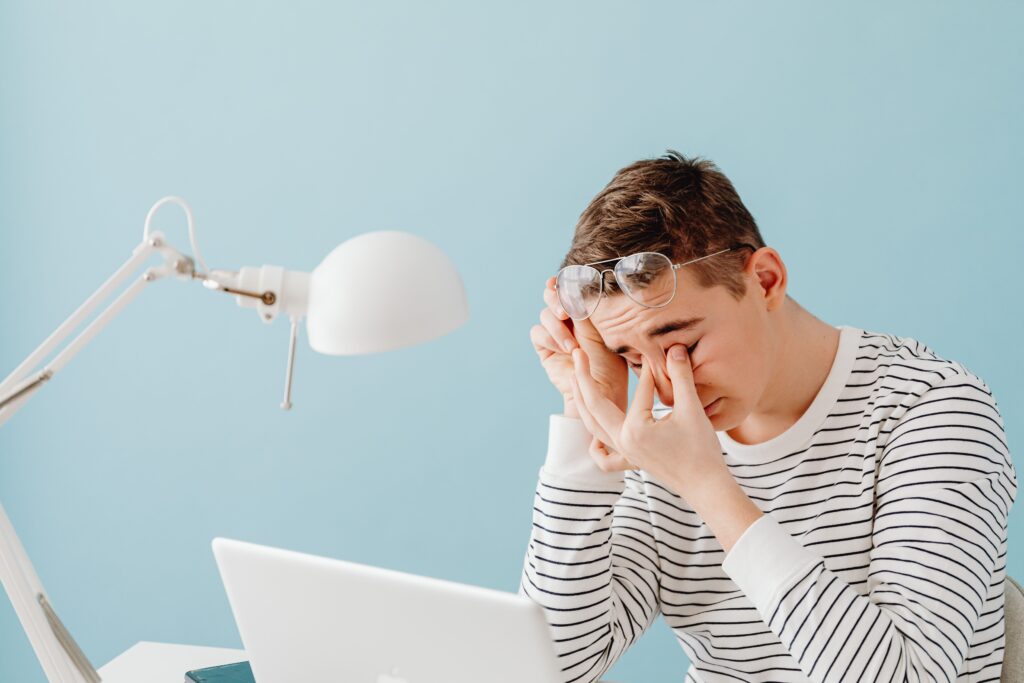
Astigmatism doesn’t cause inflammation, but the irregular cornea makes the eyes strain to focus. This can lead to discomfort and fatigue, especially during extended visual tasks such as reading or using screens.
Frequent Eye Strain
When images aren’t sharp, a person with astigmatism may squint to see more clearly. Squinting can help briefly, but it also strains the eye muscles, leading to tired, achy eyes—especially during tasks that require sustained focus.
Headaches
Headaches are common in people with uncorrected astigmatism. Strain on the eye muscles and the brain’s effort to process blurry vision can trigger tension headaches, usually felt around the forehead, temples, or behind the eyes.
What Causes Astigmatism?
Genetics is the primary cause of astigmatism. Although some believe it results from reading in dim light, sitting too close to screens, or eye strain, astigmatism is usually hereditary and present from birth, even if it isn’t noticeable until later in childhood or adulthood.
Eye injuries and post-surgery complications can also cause astigmatism.
What Causes Astigmatism To Worsen?
Astigmatism usually remains stable, but certain factors can make it worse. The most common ones include:
Aging
As we age, the eye undergoes structural changes that affect the shape and flexibility of the cornea and lens. The lens may alter its curvature, increasing or decreasing astigmatism. These changes often occur in adulthood and can precede cataract development. Routine eye exams after age 40 help track these changes and update prescriptions as needed.
Eye Injuries
Blunt force trauma, surgical cuts, or penetrating injuries can change the cornea’s shape and worsen existing astigmatism. Even minor injuries may lead to irregular corneal curvature.
Keratoconus
Keratoconus occurs when the cornea thins and gradually assumes a cone shape, distorting light and blurring vision.
Over time, the cornea becomes weaker, worsening irregular astigmatism. This condition typically begins in the teenage years and stabilizes by age 30.
Are There Different Types Of Astigmatism?
Yes, astigmatism can be classified by its origin or pattern.
- Based on Origin: Corneal astigmatism is caused by an uneven cornea, while lenticular astigmatism comes from the lens.
- Based on Pattern: Regular astigmatism has a consistent shape and is usually easy to correct. Irregular astigmatism is uneven and can be more difficult to fix.
How Is Astigmatism Diagnosed?
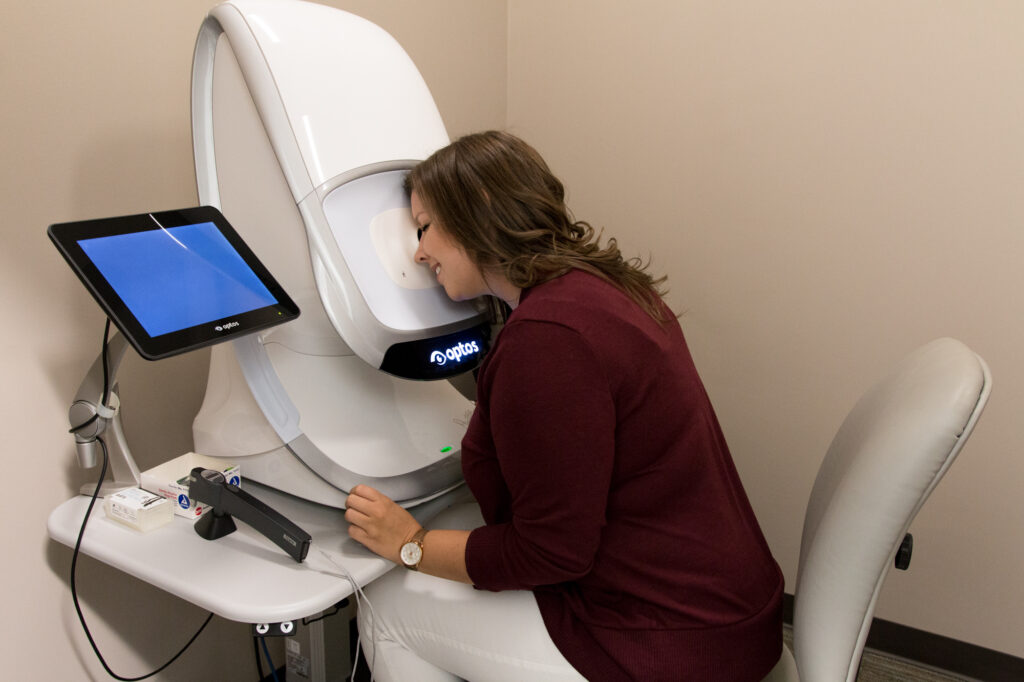
To accurately diagnose astigmatism, our eye doctors in Charlotte perform a series of personalized tests that examine your eyes and vision.
Visual Acuity Test
The visual acuity test uses a chart placed 20 feet from the patient to measure how clearly they can see at different distances. Although the test helps identify vision problems, it does not specifically diagnose astigmatism.
Refraction Test
The refraction test measures how the eyes focus light rays. Based on the information from this test, our optometrists can determine the exact prescription for glasses or contact lenses.
Keratometry
Keratometry measures the curvature of the cornea to detect uneven steepness that can cause distortion. The findings from this measurement are important for fitting contact lenses and diagnosing blurred vision.
Phoropter
A phoropter helps to determine the correct eyeglass or contact lens prescription. Patients look through different lenses and select the clearest, which helps achieve the most accurate vision correction.
Slit Lamp Exam
The slit lamp is a specialized microscope with a bright, adjustable light that lets the eye doctor examine the eye’s structures in detail. This exam helps detect abnormalities in the cornea, lens, or other areas that may contribute to astigmatism.
Can Astigmatism Be Corrected?
Yes, astigmatism can be corrected in several ways. Our eye doctors in Charlotte will evaluate the severity of your condition and your lifestyle before recommending the right solution. Treatment may include:
Eyeglasses
Eyeglasses are the most common way to correct astigmatism. Eyeglasses for astigmatism contain cylindrical lenses that compensate for the irregular shape of the cornea or lens.
Contact Lenses
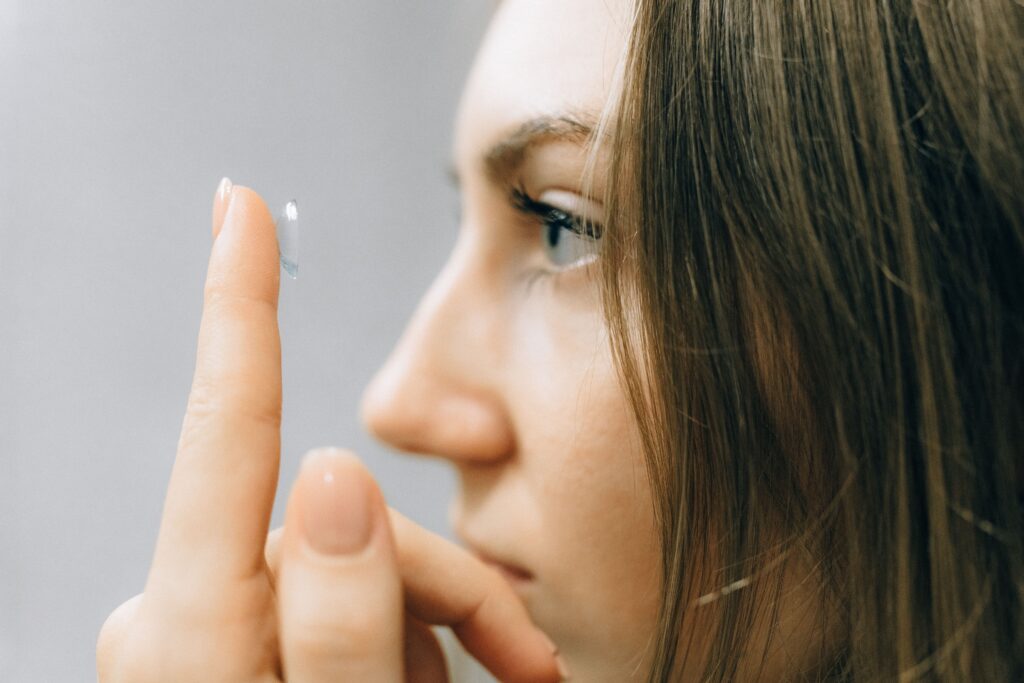
Our specialty contact lenses for astigmatism in Charlotte provide a wider field of clear vision than glasses. They also maintain proper eye alignment to correct distortion.
Laser Eye Surgery
Laser eye surgery permanently corrects astigmatism by reshaping the cornea with procedures such as LASIK, PRK, or SMILE. This results in long-lasting vision improvement and less dependence on glasses.
How Our Eye Doctor In Charlotte Can Help
Blurred vision, frequent headaches, and difficulty seeing at night can interrupt your daily life and shouldn’t be ignored.
Our expert eye doctors in Charlotte take the time to understand your unique vision needs. Through thorough eye exams, we can diagnose conditions such as astigmatism and offer personalized treatments, including glasses, contact lenses, and advanced procedures, to restore clear, comfortable vision.
Schedule an appointment today and take the first step toward healthier eyesight.
Key Takeaways
- Astigmatism is a common eye defect caused by an irregularly shaped cornea or lens that prevents light from focusing properly on the retina.
- Common symptoms include blurred or distorted vision at all distances, eye strain, headaches, and difficulty seeing at night.
- Astigmatism is primarily hereditary, though it can also develop from eye injuries, eye surgery, or progressive conditions like keratoconus.
- Diagnosis requires comprehensive eye examinations.
- Our expert optometrists, Dr. Mumford and Dr. Kenning, at Innovative Eye Care in Charlotte, NC, diagnose and correct astigmatism using eyeglasses, contact lenses, or laser eye surgery.
Sources
- https://innovativeeyecare.net/
- https://innovativeeyecare.net/meet-our-doctors/
- https://www.webmd.com/eye-health/astigmatism-eyes
- https://my.clevelandclinic.org/health/body/21562-cornea
- https://www.mayoclinic.org/diseases-conditions/nearsightedness/symptoms-causes/syc-20375556
- https://www.mayoclinic.org/diseases-conditions/cataracts/symptoms-causes/syc-20353790
- https://my.clevelandclinic.org/health/diseases/hyperopia-farsightedness
- https://my.clevelandclinic.org/health/diseases/8257-tension-headaches
- https://my.clevelandclinic.org/health/diseases/8576-astigmatism
- https://my.clevelandclinic.org/health/diseases/blunt-force-trauma
- https://www.healthline.com/health/visual-acuity-test
- https://www.healthline.com/health/refraction-test
- https://my.clevelandclinic.org/health/diagnostics/keratometry
- https://www.aao.org/education/image/phoropter-3
- https://www.aao.org/eye-health/treatments/what-is-slit-lamp
- https://innovativeeyecare.net/
- https://innovativeeyecare.net/specialty-contact-lenses-charlotte-nc/
- https://www.mayoclinic.org/tests-procedures/lasik-eye-surgery/about/pac-20384774
- https://my.clevelandclinic.org/health/procedures/photorefractive-keratectomy-prk-eye-surgery
- https://my.clevelandclinic.org/health/treatments/25076-smile-eye-surgery
- https://innovativeeyecare.net/eye-health-evaluation-charlotte-nc/