

TLDR
Scleral lenses are large, custom-designed contact lenses that cover the cornea and may help with visual problems associated with keratoconus, irregular astigmatism, severe dry eye, and post-surgical corneal changes. They must be cleaned, handled, and fitted correctly, so it’s important to work with an experienced eye specialist. Our eye doctors in Charlotte are experts in designing and fitting custom scleral lenses and can help evaluate whether they suit your vision needs.
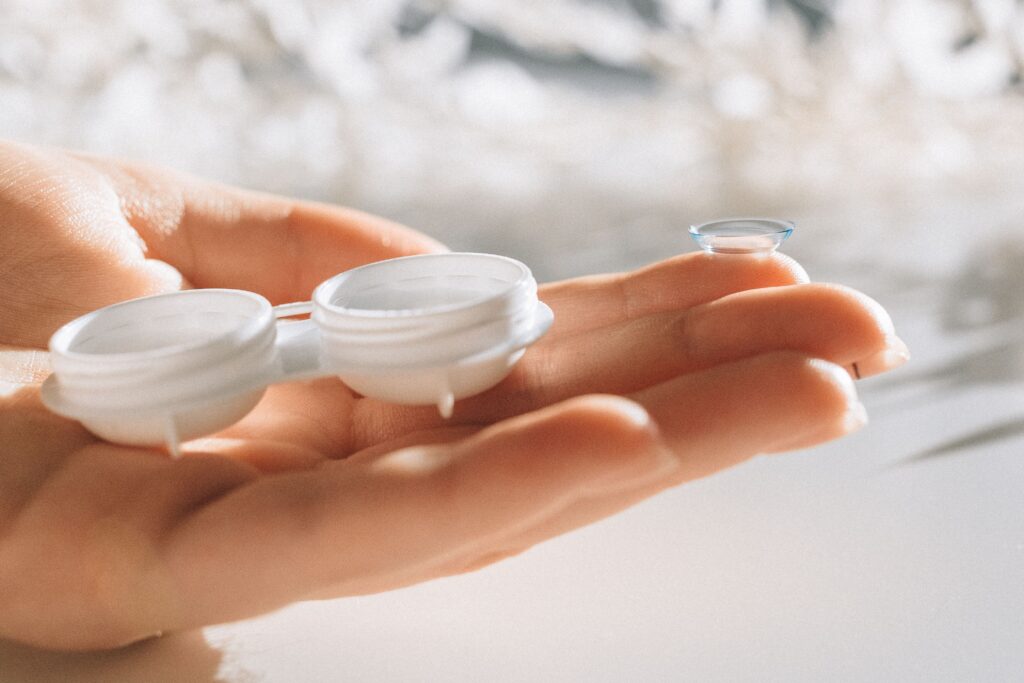
Scleral lenses are larger in size and fit differently on the eye than ordinary contact lenses. Rather than resting on the cornea, these larger, rigid lenses vault over it and rest on the sclera, the white part of the eye.
A layer of preservative-free saline sits between the lens and cornea, creating a fluid cushion around the eye. “Every eye has a unique shape,” explains Dr. Mumford, our contact lens specialist in Charlotte. That is why scleral lenses are custom-fitted to each patient’s eye, with the fit tailored to their vision needs and comfort by an eye doctor trained in specialty contact lenses.
What Is a Scleral Lens Used For?
If glasses or standard contact lenses aren’t giving you clear, comfortable vision, scleral lenses may be a viable solution. Certain corneal and ocular surface conditions can indicate when scleral lenses are a particularly useful option.
Sign 1: You’ve Been Diagnosed with Keratoconus or Corneal Ectasia
Keratoconus and corneal ectasia can cause the cornea to thin and develop an irregular shape, which can distort how light enters the eye and lead to blurry or distorted vision. Glasses and standard contact lenses may not fully correct the irregular astigmatism caused by these changes. A scleral lens for keratoconus vaults over the irregular cornea and creates a smooth optical surface, helping light focus more clearly.
For many people with keratoconus, scleral lenses can provide clearer vision when other forms of correction are no longer enough.
Sign 2: Severe, Chronic Dry Eye Keeps You from Wearing Regular Contacts
If chronic dry eye has made regular contacts unbearable, scleral lenses for dry eye may offer relief that eye drops alone cannot. Because the space between the lens and the cornea holds a reservoir of saline, it helps keep the eye moist throughout the day instead of drying out under a thin, moving soft lens.
For people with severe dry eye, this can make contact lens wear more comfortable when regular contacts are difficult to tolerate.
Sign 3: High or Irregular Astigmatism Causes Blurry, Shifting Vision
High or irregular astigmatism can make vision blurry or fluctuate when conventional correction does not adequately account for the shape of the eye. While glasses and soft contact lenses can correct many types of astigmatism, they may not provide clear, stable vision when the corneal shape is highly irregular.
A scleral lens maintains its shape over the cornea, creating a stable optical surface that can improve visual clarity in these cases.
Sign 4: You Face Post-Surgical Reshaping (LASIK, PRK, or RK)
Some patients develop an irregular corneal surface after LASIK, PRK, or radial keratotomy (RK), particularly when healing leads to significant changes in the shape of the cornea or post-surgical ectasia. In these cases, a scleral lens can vault over the altered cornea and create a smoother optical surface, which may improve visual clarity without surgically changing the cornea again.
Sign 5: Traditional Hard Lenses (RGP) Feel Too Uncomfortable
Rigid gas-permeable (RGP) lenses can provide clear, sharp vision, but their smaller size means they rest directly on the sensitive cornea. Because they can move when you blink, some people find them irritating or uncomfortable to wear.
A scleral lens is also rigid and gas-permeable, but its larger diameter allows it to rest on the less sensitive sclera instead. This helps it stay in place and feel less noticeable throughout the day.
If RGP lenses feel like more trouble than they’re worth, scleral lenses may provide the visual clarity of a rigid lens with a more comfortable wearing experience.
What Are the Downsides of Scleral Lenses?
Scleral lenses aren’t without trade-offs. Here are a few things to consider:
- The fitting process takes more time and expertise than a standard contact lens exam.
- Patients also have to learn a new insertion and removal routine.
- Debris can sometimes collect in the fluid reservoir, causing midday fogging.
- Scleral lenses have a higher upfront cost than soft contact lenses.
At Innovative Eye Care, we know getting used to scleral lenses can take some time. We guide you through the fitting process, show you how to handle your lenses, and make sure you feel comfortable with your new routine from day one.
Can You Get 20/20 Vision With Scleral Lenses?
Yes, scleral lenses can restore 20/20 vision or close to it, especially for those with keratoconus, irregular astigmatism, or corneal scarring.
How close you get to 20/20 depends on the condition being treated and whether anything else is affecting your vision. An eye health examination can help determine what level of vision you can realistically expect from scleral lenses.
How Long Do Scleral Lenses Last?
Scleral lenses are durable and can last for 12 to 36 months with proper care. Their lifespan depends partly on how consistently you clean and store them, since scratches, deposits, and warping can build up gradually with daily wear.
Regular follow-up visits can help catch small issues, such as a slight change in vision or lens damage, before they become bigger problems.
Who Can’t Wear Scleral Lenses?
Scleral lenses aren’t the right fit for everyone, and your eye doctor may recommend against them or take extra precautions if:
- You can’t reliably follow the routine care, proper cleaning, handling, and lens hygiene essential for safe scleral lens wear.
- You have difficulty keeping your eyes open to insert and remove the lenses because of limited dexterity or certain eyelid problems.
- Certain eye conditions, such as low corneal endothelial cell density, make scleral lens wear unsafe or uncomfortable.
Can Children Wear Scleral Lenses?
Yes, scleral lenses can suit children with conditions such as keratoconus, significant astigmatism, severe dry eye, and Stevens-Johnson syndrome.
Like any other contact lens, scleral lenses take some practice to handle, so parents may need to provide more help at first while their child learns how to insert, remove, and care for the lenses, with guidance from an eye doctor who has experience fitting children.
What Happens During a Scleral Lens Fitting?
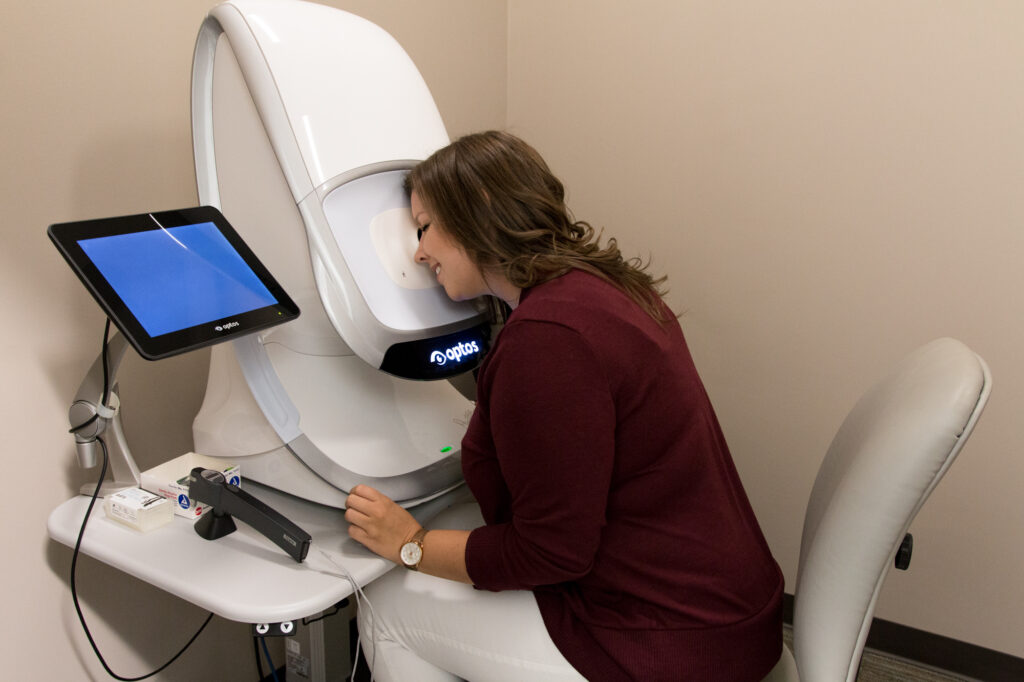
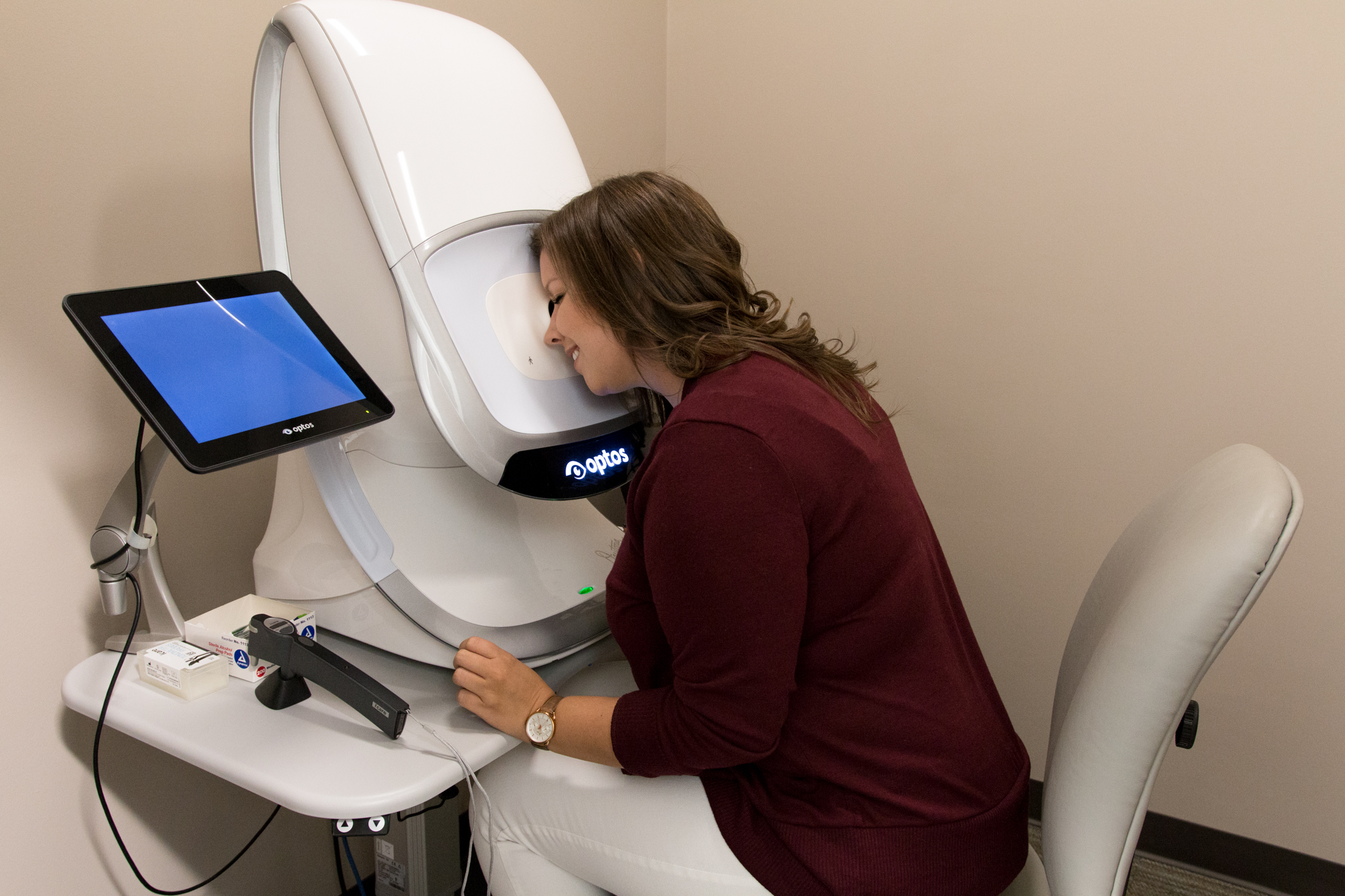
Our contact lens specialist in Charlotte starts the scleral lens fitting with a comprehensive eye health evaluation to map the exact shape of your cornea and sclera using specialized imaging technology.
The next steps include:
- Trial lens selection: A trial lens is selected based on the shape of your eye and checked to see how it settles.
- Fit and vision assessment: We check the fit and your vision, adjusting the lens diameter, curve, and vault as needed.
- Custom lens design: Once the right fit is determined, a custom lens is designed based on the shape of your eye.
- Hands-on training: You learn how to insert, remove, and clean your custom lenses before leaving.
What a Specialty Custom Fitting Looks Like at Innovative Eye Care
At Innovative Eye Care, we take the time to understand your vision needs, preferences, and comfort before designing a specialty lens that fits the unique shape of your eye.
We also understand that eyewear is part of your personal style, which is why we look beyond vision correction to help you find eyewear that feels like you.
Our attention to detail means your comfort, vision, and experience with your lenses are all considered throughout the fitting process.
If you’re looking for scleral lenses in Charlotte, our eye doctors serving Uptown Charlotte, Dilworth, and Myers Park provide specialty scleral lens fittings for adults and children, with care tailored to their individual vision needs. Contact us to schedule an appointment.
Key Takeaways
- Scleral lenses vault over the entire cornea, correcting vision problems caused by keratoconus, severe dry eye, irregular astigmatism, and post-surgical corneas.
- Each lens is custom-fitted to the unique shape of the eye, so no two people can wear the same lens.
- The fitting process takes more time than a standard contact lens fitting.
- Wearing scleral lenses requires learning how to insert, remove, and care for them.
- Dr. Kenning, Dr. Mumford, and Dr. Krisa at Innovative Eye Care in Charlotte offer specialty scleral lens fittings for adults and children to help address their individual vision needs.
Sources
- https://innovativeeyecare.net/
- https://www.optometrists.org/general-practice-optometry/optical/guide-to-contact-lenses/what-are-scleral-lenses/what-are-the-benefits-of-scleral-lenses/
- https://innovativeeyecare.net/astigmatism-vs-normal-vision-what-it-looks-like/
- https://eyewiki.org/LASIK_Complications
- https://www.webmd.com/eye-health/what-to-know-about-scleral-contact-lenses
- https://www.aoa.org/healthy-eyes/vision-and-vision-correction/visual-acuity
- https://innovativeeyecare.net/eye-exam-charlotte-nc/
- https://www.healthline.com/health/dry-eye/scleral-lenses-for-dry-eye
- https://pmc.ncbi.nlm.nih.gov/articles/PMC11714089/https://innovativeeyecare.net/contact-us/